
CDI: Sharpening Skills, Transforming Lives
By Sumon Corraya
Program Officer, Communications, Caritas Bangladesh
For many grassroots organizations in Bangladesh, sustainability begins with skills. Caritas Development Institute (CDI)—the training and research arm of Caritas Bangladesh—has been quietly transforming institutions and lives by strengthening the capacities of development practitioners across the country.
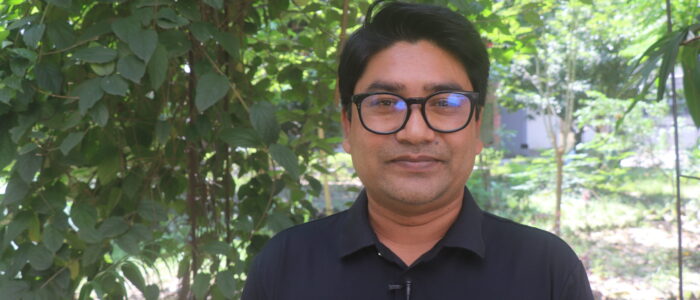
For ATM Russell Kabir of Samakal Samaj Unnayan Sangstha in Rangpur, CDI’s training was a turning point early in his career.
“At the beginning, I did not fully understand development work. Through CDI, I received training on project proposal writing, quality report writing, and other essential areas,” he shared.
He emphasized that proposal-writing training had the greatest impact.
“It taught me how to identify the real problems and needs of target communities. Now, our project proposals are rooted in community realities.”
As a result, Kabir said, poor and indigenous communities in his area have experienced meaningful and sustainable development.
“Without CDI’s skill training and guidance, we would still be dependent on external consultants—often based in Dhaka, drafting proposals from air-conditioned rooms that fail to address the root causes of marginalization,” he said.
“I give full credit to Caritas Bangladesh and Caritas Development Institute for empowering us.”
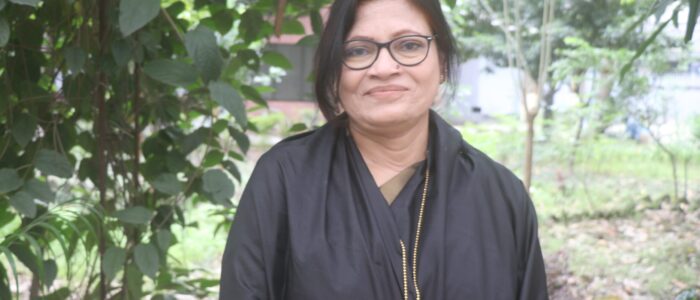
Nasima Begum, Executive Director of Shishu Niloy Foundation, which has maintained a partnership with Caritas Bangladesh since 1991.
“Over the years, CDI has played a vital role in strengthening our human resources,” she said gratefully. “I personally received training on financial management, report writing, and Training of Trainers (ToT). Our staff members have also benefited immensely.”
According to Begum, the impact of CDI’s training goes beyond skills acquisition.
“After receiving the training, we are able to implement our activities more efficiently. Even today, I consult CDI trainers whenever we face challenges. This cordial and supportive relationship has helped our organization grow.”
Ashim Kumar Bakshi, Monitoring Officer at Gandhi Ashram Trust, recalls a time when his organization depended entirely on external consultants for project planning and design.
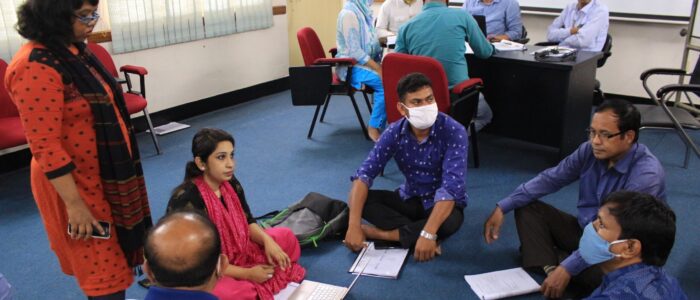 Group work during training
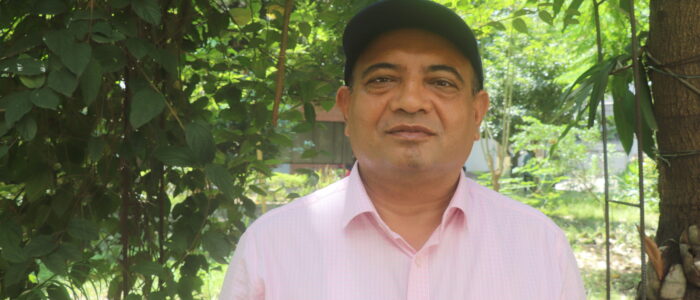

“Once upon a time, we had to rely on others to do this work. That is no longer the case. Today, we plan and design new projects independently—thanks to the training we received from CDI,” he said.
Bakshi added that CDI’s training courses on results-based monitoring, Do No Harm, and other development tools have significantly improved their planning and implementation processes.
“With proper monitoring skills, our projects are now better planned and more effectively implemented,” he noted.
About Caritas Development Institute (CDI)
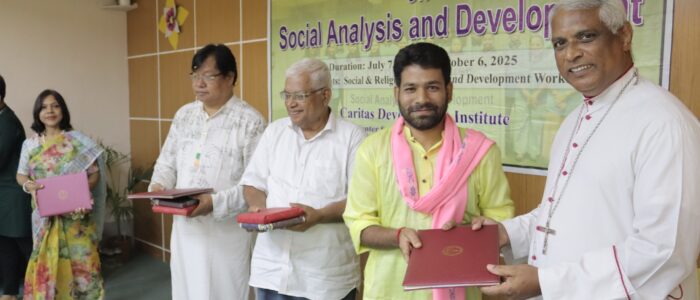
Caritas Development Institute (CDI) is the Training and Research Center of Caritas Bangladesh, established in 1983. CDI provides training, evaluation, and research services to Caritas project staff, NGOs, people’s organizations, Church institutions, and ethnic groups across Bangladesh.
Since its inception, CDI has been supporting development partners through continuous innovation, contextual learning, and practical skill-building, enabling organizations to stand on their own feet and serve marginalized communities more effectively.
📌 To learn more about CDI, visit: